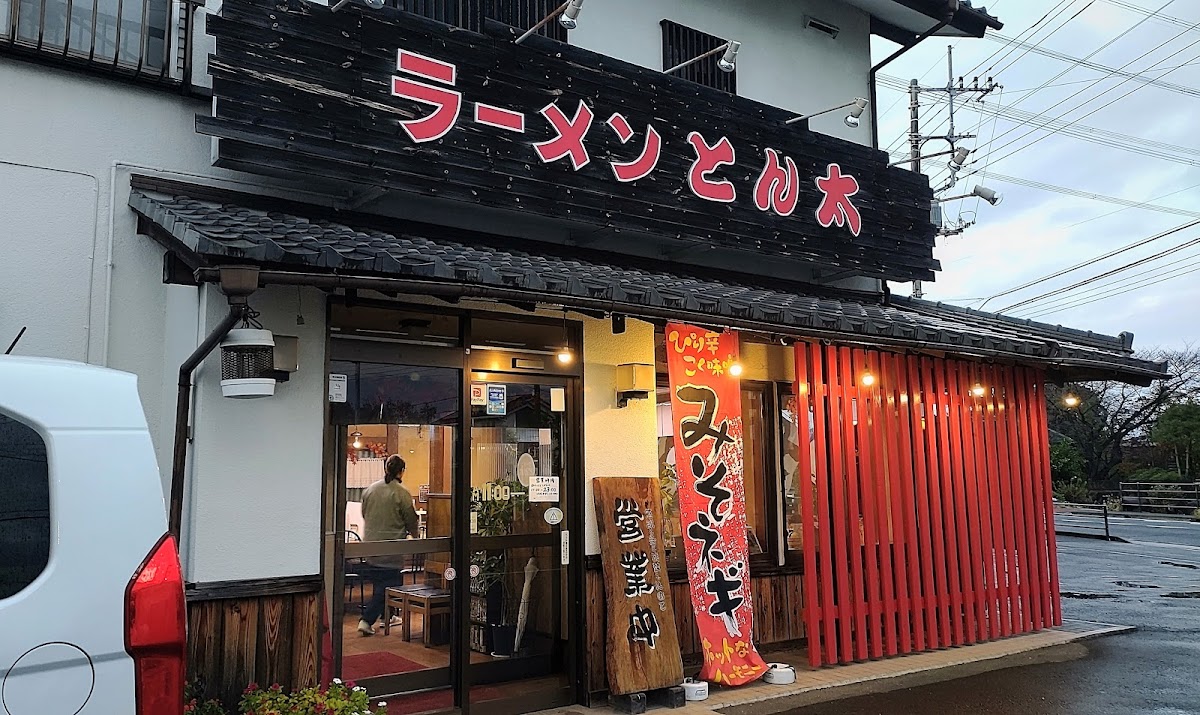
熊谷バイバス近くの17号沿いにあるチェーン店のラーメン屋。 駐車場はあるがやや狭く、台数も少なめ。 千葉県など関東圏を中心に展開しているロードサイド系ラーメン店だが、妙にこの店舗だけ味が良い。 油に味噌というサッポロラーメンスタイルなのだが ロードサイド飯特有の攻撃的な塩味ではなく、まろみのある味噌本来の柔らかい旨味広がる味。 玄人もお子様も食べれる、安心さのあるそんなラーメンだった。 にんにくチップなども別途あるので、ガッツリ食べたい方もどうぞ。
Overview
Tucked away at 39-1 Takayanagi, Kumagaya, Saitama 360-0855, Japan, Ramen Tonta is the kind of place you hear about from locals long before you see it trending in travel guides. I first stopped by on a chilly evening after a long day exploring Kumagaya, and the line outside told me everything I needed to know. In Japan, people don’t queue in the cold unless something special is waiting inside.
The shop itself is unpretentious. Think counter seating, the comforting hum of conversation, and the rhythmic clatter of bowls behind the kitchen curtain. Yet what happens in that kitchen is anything but ordinary. The star of the menu is their rich tonkotsu ramen, built on a broth that simmers for hours to extract collagen, marrow, and deep pork flavor. According to the Japan Ramen Association, tonkotsu broth requires extended boiling at high temperatures to emulsify fat and water into that signature creamy texture. You can taste that technique here-the soup is opaque, silky, and coats the noodles perfectly without feeling greasy.
On my first visit, I ordered the classic pork bone ramen topped with chashu, ajitama (marinated soft-boiled egg), and fresh scallions. The chashu was tender enough to fall apart with chopsticks, clearly slow-braised at low heat to preserve moisture. That’s not guesswork; it’s a common method used in traditional ramen shops across Fukuoka and Saitama, and you can recognize it by the balance of fat and lean layers in each slice. The egg had a custard-like center, which only happens when it’s timed precisely-usually six to seven minutes in gently boiling water, then marinated overnight in soy-based tare.
Beyond tonkotsu, the menu offers variations that cater to different tastes. There’s a spicy miso option for those who like heat, and a lighter shoyu-based bowl that still carries depth without overwhelming richness. If you’re visiting with friends, ordering a side of gyoza is a smart move. The dumplings arrive crisp on the bottom and juicy inside, a contrast that shows careful pan control. In Japanese cooking, that golden crust-known as hanetsuki-requires just the right slurry of flour and water to create the delicate wing.
What sets this ramen shop apart isn’t just flavor; it’s consistency. I’ve been back multiple times, and each bowl has maintained the same structure and balance. That kind of reliability speaks volumes about process. Broth preparation likely starts early in the morning, and noodle texture remains firm yet elastic, suggesting high-quality wheat flour and proper hydration ratios. Food scientists often note that alkaline noodles, made with kansui, develop that distinctive chew. You can feel it in every bite here.
Customer reviews across Japanese dining platforms consistently praise the portion size and value for money. Kumagaya isn’t as crowded as Tokyo, so finding a spot that delivers city-level quality without city-level prices feels like a win. Families, students, and salarymen all seem to share the same appreciation. I once sat next to an older gentleman who told me he drives from a neighboring town every weekend just for this bowl. That kind of loyalty isn’t built on hype; it’s built on trust.
From a broader perspective, ramen culture in Saitama has grown steadily over the past decade, with regional shops gaining recognition in national food rankings. While Michelin recognition tends to spotlight Tokyo establishments, regional favorites often earn equal respect among serious ramen enthusiasts. The craftsmanship at this address stands comfortably within that conversation.
Service is efficient and straightforward. You order, you sit, and within minutes a steaming bowl lands in front of you. There’s no unnecessary flair, just a clear focus on delivering quality. Cash is still commonly used, so it’s wise to come prepared. As with many popular ramen-ya, peak hours can mean waiting, but turnover is quick.
It’s worth noting that menus can change seasonally, and occasional limited-edition bowls appear without much notice. If you’re particular about specific toppings or dietary restrictions, asking staff directly is the safest approach, as English explanations may be limited.
In a town that might not be on every tourist map, this small shop proves that exceptional ramen doesn’t need a flashy location. What matters is technique, ingredients, and the steady hands behind the counter-and on all three fronts, this spot delivers.
Good to know
Service options
✓ Dine-in ✓ DeliveryPopular for
✓ Lunch ✓ Dinner ✓ Solo diningAccessibility
✓ Wheelchair-accessible car park ✓ Wheelchair-accessible entrance ✓ Wheelchair-accessible seatingOfferings
✓ Alcohol ✓ Beer ✓ Late-night foodDining options
✓ Lunch ✓ Dinner ✓ Table serviceAmenities
✓ ToiletCrowd
✓ GroupsPayments
✓ PayPayChildren
✓ Good for kidsParking
✓ Free parking lot ✓ ParkingPhotos
1 / 4
Location
Reviews
- No ratings yet 174 reviews
出張の為、静岡から11/14(金)18時半頃訪問しました。 先客が4組程居たがラーメン提供迄の時間が早かったような。 1番人気の味噌ラーメン大盛りにのり、バター、すりおろしにんにくのトッピングに中ライスを注文しました。 スープは濃厚でありバターを入れた事で更に濃厚ですりおろしにんにくを入れる事でちょっとピリ辛になりスープも超熱々で提供してくれる為発汗作用があり体がポカポカします。 のりも磯の香りがするしっかりしたのりでラーメンに巻いて食べてよし、スープに浸してライスに巻いてよしで麺も太麺で食べ応えあります。 もやしのシャキシャキ感も良く全てにおいて満足できました。
味噌ネギラーメンと餃子たべました。 味噌ネギのネギはごま油で軽く炒めてあって美味しかったです。 餃子は大きめで外側がパリっと焼けてて美味しかったです。 牛若餃子という小さい餃子もあるみたいなので、それは次回にします。
久々にラーメンとん太にきた。 群馬にもあったはずだが結構閉店してる。 味噌ラーメン+餃子ライスセット1240円 餃子大きめ 味噌ラーメンはちょうど良い濃さ ただ他チェーンに比べるとパンチないか でも美味しい。 私には丁度いい チャーシューはあまり評判良くないみたい。 店は古さがあるけどカウンターは敷居があり広くていい 近くの山岡家よりお客様の年齢層高めで静かなのもいい
昔、千成らーめんというチェーンが出店を伸ばしていた時期がありまして、そこの味噌ネギラーメンの味が好みで会社の近所にできた店舗に足繁く通ってました(そこのマスターに伺った話ではとん太さんで修業したそうです)。ところが、ある時期から閉店が相次ぎ現在は本部お膝元の千葉にたった1店舗。東北に3?店舗。 というわけで、在りし日の味を求めてFC本部を共にするこちらのお店に金曜日の16:30頃伺いました。先客は2組9名ほど後客0。厨房の男性の方と接客の女性の方2名で回しておられました。カウンター席無し、1人用に間仕切りされた6人掛けテーブル1、お客さんが付いていたのでまじまじとは確認できませんでしたが4~6人掛けテーブル2、小上がり2といった感じ。 味噌ネギラーメン+にんにくチップトッピング(昔千成チップという同じような薬味がありまして)+餃子5ライスセットをオーダー。15分ほどで着丼。 餃子は大ぶりで餡はジューシーでアチアチです。皮は普通。 味噌ラーメンは中太の縮れ麺で濃い味噌スープ。はっきり言ってクドイです(誉め言葉)。味噌スープがクドイぐらいじゃないと、わざわざ味噌ラーメン食べる意味はないと思っていますので個人的にはgood。欲を言えばスープの量はもう少し嵩が欲しい。 お店の雰囲気は決して悪くないんですが、調教能力の欠如した調教師が束ねる動物園一行がギャースカ大騒ぎしていたのでこの星にさせて頂きました。飲食店側が強く注意できないのも理解できますが、この有様なので子連れお断りの店が増えるのも致し方ないですね。 私好みの味噌ラーメンで美味しかったです。 ごちそうさまでした。 写真よく見たら餃子一個少ないですね。我慢しきれず撮影前にフライングしました(笑。
15年以上ぶりの訪問です。以前来店した際には喫煙可だったのでタバコの煙でラーメンの味も霞んでしまい記憶にないのですが、今回改めて訪問し、感染防止対策や店内の清潔さに驚きました。隅々まで行き届いた清掃はとても素晴らしいですね。肝心のラーメンですが、味噌ネギラーメンをいただきました。ザ・みそラーメンという王道の味で、何度も食べたくなる味です。やっぱり味噌ラーメンはこうじゃなきゃいけないですよね。とても美味しかったです。ご馳走さまでした。